

Transcript:
As you just learned, nature provides us with access to natural electromagnetic fields or EMFs.
These come by way of sunlight and the Schumann Resonance.
There are also other types of electromagnetic frequencies or radiation in our environment.
The last category of EMFs we’ll be talking about in The CRD Challenge are associated with the use of man-made electrical devices.
How Technology Torments
7:48
Transcript:
As you just learned, nature provides us with access to natural electromagnetic fields or EMFs.
These come by way of sunlight and the Schumann Resonance.
There are also other types of electromagnetic frequencies or radiation in our environment.
The last category of EMFs we’ll be talking about in The CRD Challenge are associated with the use of man-made electrical devices.
A consequence of our ongoing technological revolution is our ever-increasing exposure to modern machinery.
Modern machinery runs on and produces artificial electromagnetic fields (EMFs).
Man-made sources of EMFs, including from power plants, the myriad devices we plug into the electrical grid and wireless technologies, all emit unnatural EMFs.
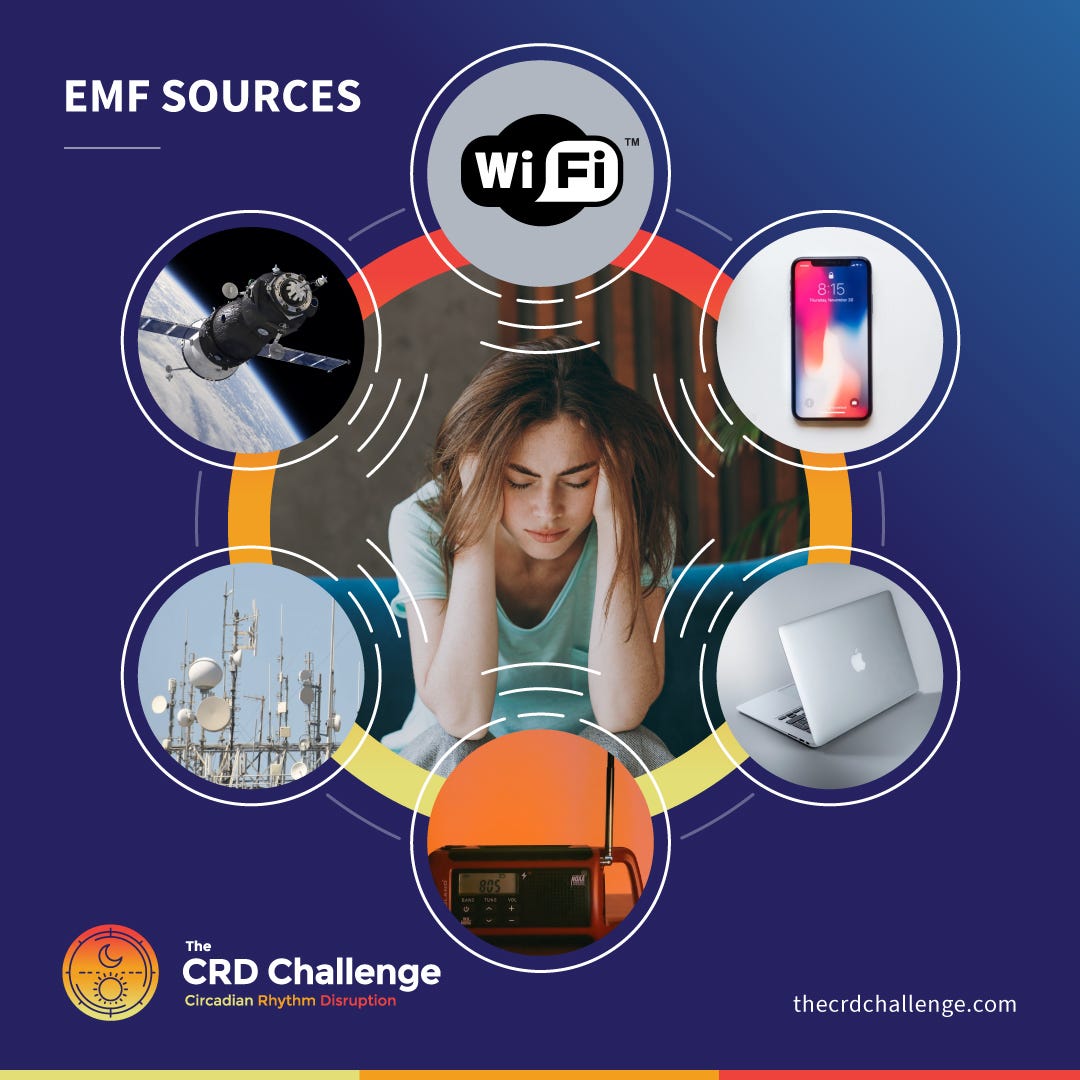
These kinds of EMFs, unlike the Schumann Resonance, have been shown to cause a variety of stress-related responses for our biology.
You already know what the constant barrage of non-stop communication, entertainment and media feels like.
Now more than ever before, we’re overwhelmed by the constant distractions and stimulation of devices.
However, what if it isn’t only the unending work emails and hours spent scrolling social media, but also the unnatural electric fields causing us stress?
Is our overuse of technology and exposure to its frequencies negatively influencing circadian health? And if so, what can we do about it?
A poll by the National Sleep Foundation estimated that 89% of adults and 75% of children have at least one electronic device in their bedroom.
Other research has suggested that 85% of US individuals own smartphones and many use them up until bedtime.
Whether it’s smartphones, televisions, computers, laptops, tablets or game consoles, most people own at least one or two of these devices.
Not only that, but they most often reside in our bedrooms or close to our bodies throughout the evening and nighttime.
There are a multitude of factors through which this technology can disrupt our body, but these are outside of the scope of this education.
For the purpose of The CRD Challenge, we’re helping you to work towards healthy, well-timed circadian rhythms and deep, restful and restorative sleep.
That’s why we have to encourage you to push back against some of technology’s ability to keep you stimulated into the night.
Technology puts communication, work, education, and entertainment at hand—and too much so at bedtime.
Unfettered access to the internet, especially as entertainment, facilitates bedtime procrastination, which is the act of delaying sleep without external reasons.
And it’s not only the stimulation provided by the activities undertaken on our devices that can keep us awake.
These devices also increase our exposure to artificial blue light from their LED screens.
You learned about this already in the first week of the challenge, and that is why you started dimming your screens at night.
Maybe you even downloaded an app or bought blue light blocking glasses to block the light from your devices.
People experiencing bedtime procrastination were shown to spend roughly 1 h more on their phone than others.
This was found to lead to increased light exposure, impaired melatonin and disrupted circadian rhythms
Devices don’t only emit visible light, however.
Many also emit and receive Bluetooth, 3G, 4G, 5G, WiFi and other forms of wireless connectivity.
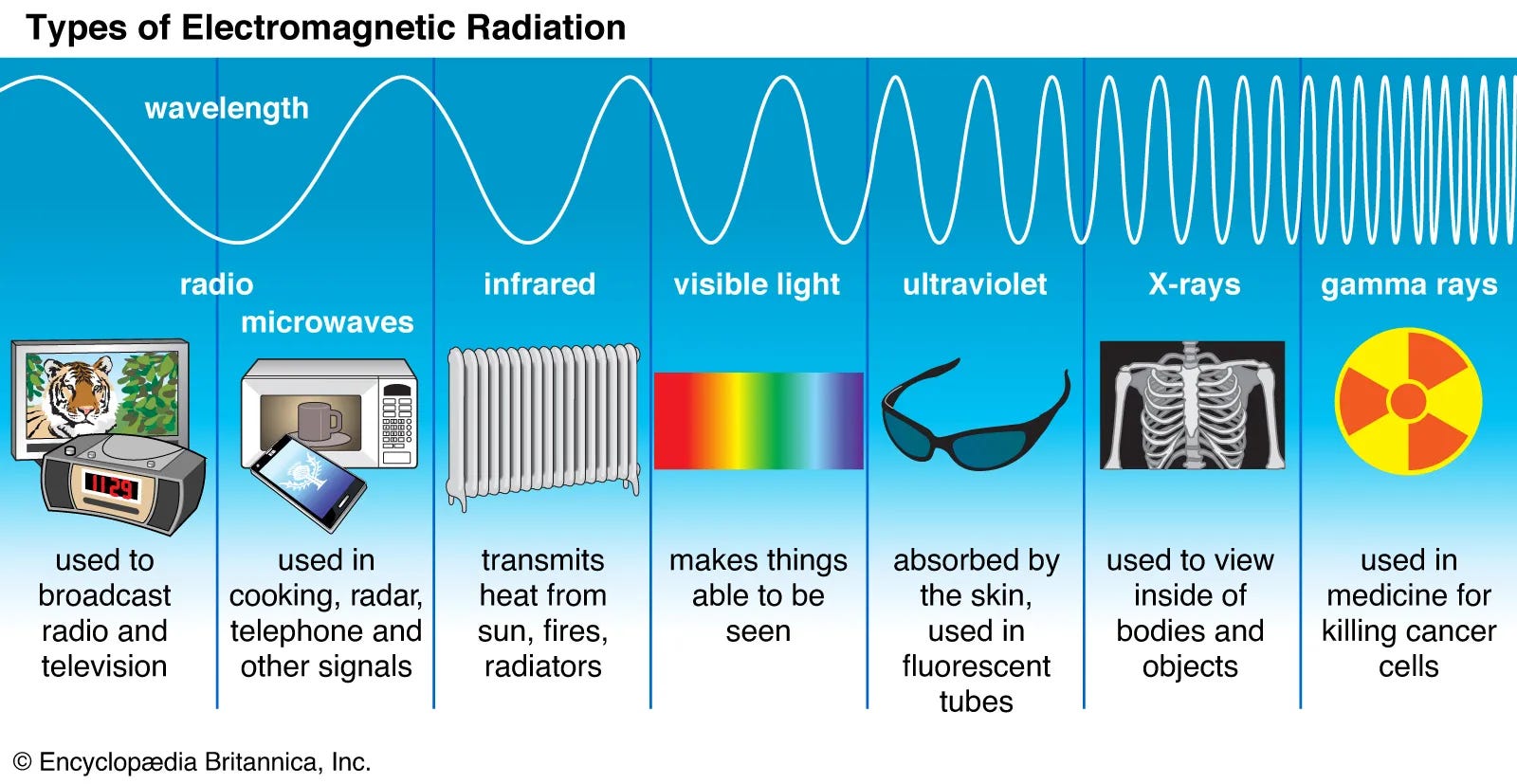
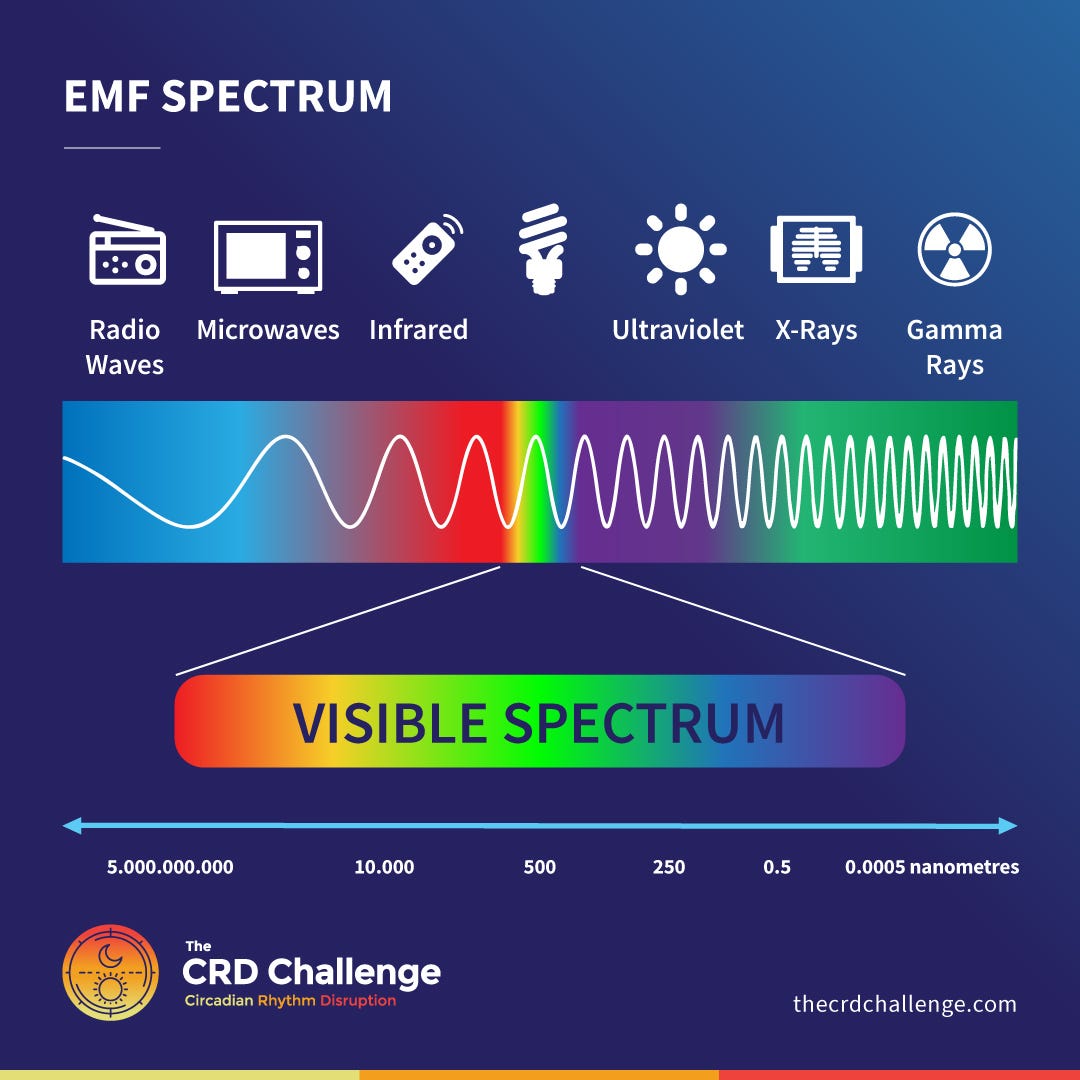
These electromagnetic frequencies (EMFs) are on the same spectrum as light, only they’re invisible so we can’t see them with our naked eye.
They still exist and are measurable with certain devices that demonstrate that they are present from technology in higher quantities than they are ever found in nature.
Unfortunately, these EMFs have also been demonstrated to disrupt our sleep—which as you know, is a key measure of circadian health.
For example, man-made EMFs are associated with reductions in total sleep time and sleep efficiency, as well as a reduction in the amount of time spent in the deep and REM stages of sleep.
All of that leads to an increased time in the light sleep stage, which is to say our sleep quality is not as good when exposed to these kinds of EMFs.
Other studies have shown adverse changes to particular brain wave activity in sleep when exposed to EMFs compared to control groups.
And another dominant hypothesis about this association is that man-made EMFs cause the suppression of night-time melatonin.
Despite some differences in the reported results of studies exploring this theory, EMF exposure still has to be considered.
Many studies have shown EMFs to be a factor definitely affecting sleep and possibly influencing the circadian system, too.
That’s why the final part of this challenge involves mitigating exposure to nighttime technology.
In the quest for healthy circadian rhythms, you can apply simple steps to optimise your use of technology and exposure to EMFs at night.
These build upon the steps you have already taken earlier in the challenge, such as: applying light filtering settings to screens or using amber or red blue light blocking glasses.
Those steps help protect you against the detrimental impact of ALAN from technology screens.
The next steps will help protect you against the effects of the other frequencies besides the visible light that devices emit.
Please also recognise that there are additional drawbacks to using devices late at night.
These include viewing content that keeps your mind stimulated and delays the time at which you want to go to sleep.
Even with the light adjusted, technology can still encourage bedtime procrastination, which is not good for your sleep or circadian health.
How to Create a Better Relationship With Technology At Night
For the final week of The CRD challenge, here are your action items:
Firstly, remove wireless technology including mobile phones, computers, tablets, and wearables from your bedside.
Secondly, put any wireless devices into aeroplane mode before and during sleep. This will disable their connectivity to mobile internet or WiFi, reducing levels of EMF exposure.
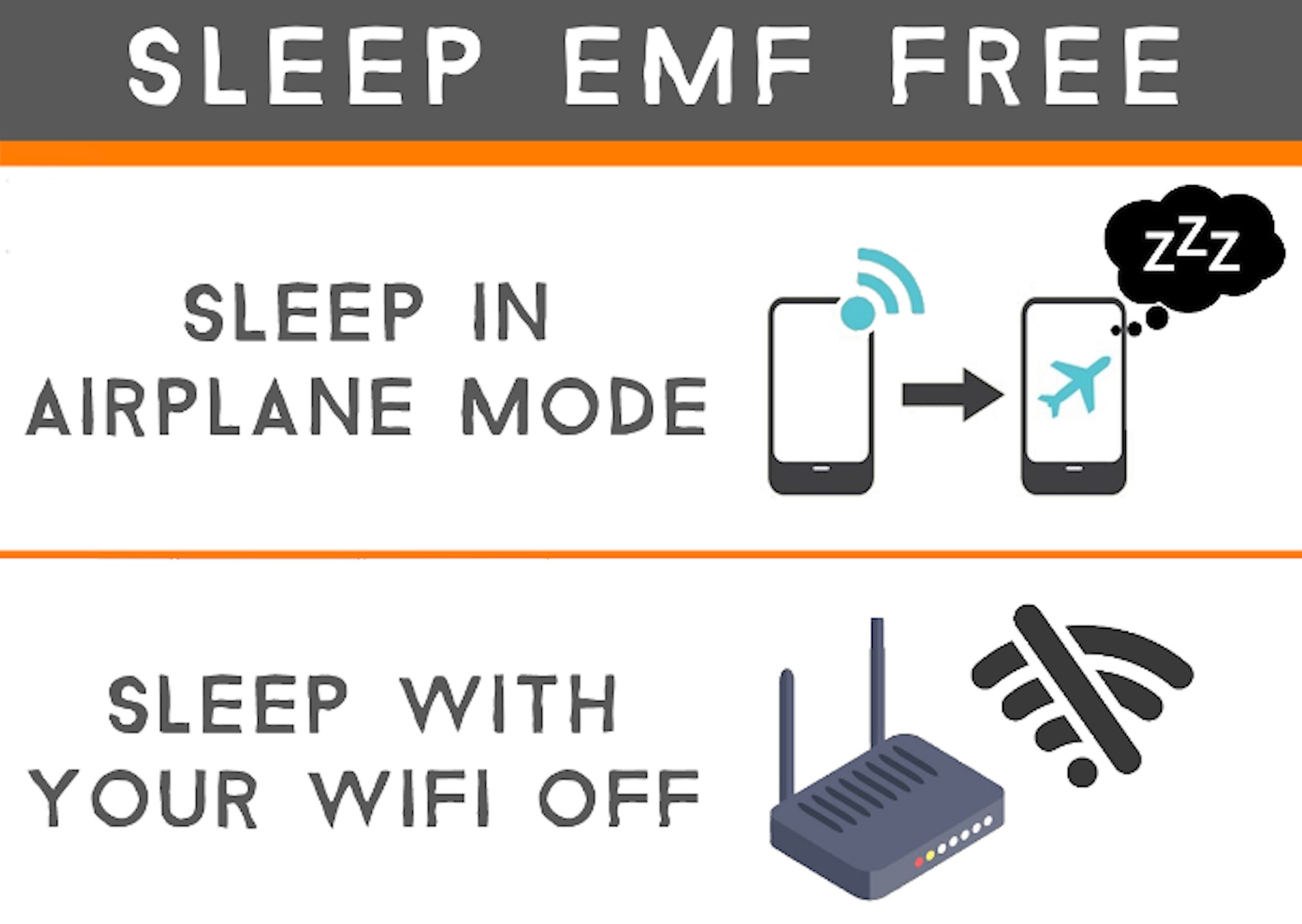
If you currently use your mobile phone as an alarm clock, placing it in aeroplane mode further away from your bed whilst you sleep can be a great option.
Decreasing the regular use of tech devices close to bedtime is made much easier by replacing the habit, rather than just trying to “stop”.
Think about other things that can be done in the evening.
For example, what if you used that time for relaxing offline activities?
Many find peace leading up to bedtime by reading books, taking a warm bath and spending time outdoors or with family.
For those of you who have young children, you’ll be amazed at how much they might love to hear you sing lullabies just as much as they used to love watching TV before bed.
If you’re at all skeptical about this advice, then we recommend testing it out for at least 3-4 nights in the coming week.
This should be more than enough time to judge if there have been any changes to how you feel.
Pay special attention to your nighttime sleep quality and daytime alertness, the two key hallmarks of healthy circadian rhythms.